
The Benefits of Nonwoven Wool Felt in Industrial Applications
May 04, 2026
Discover why nonwoven wool felt remains a trusted material for industrial gaskets, seals, lubrication systems, vibration control, and precision-manufactured components.
Industrial manufacturers depend on materials that deliver consistent performance, durability, and versatility. While modern manufacturing has introduced countless synthetic alternatives, nonwoven wool felt remains one of the most reliable and adaptable industrial textiles available today.
From automotive manufacturing and aerospace engineering to heavy machinery and industrial equipment maintenance, wool felt provides a unique combination of mechanical, thermal, and absorbent properties.
At Southeastern Felt & Supply Corp., we specialize in supplying industrial felt materials and custom-fabricated components designed to meet the requirements of modern manufacturing.
Understanding the benefits of nonwoven wool felt can help engineers, purchasing professionals, and maintenance managers select the right material for their applications.
What Is Nonwoven Wool Felt?
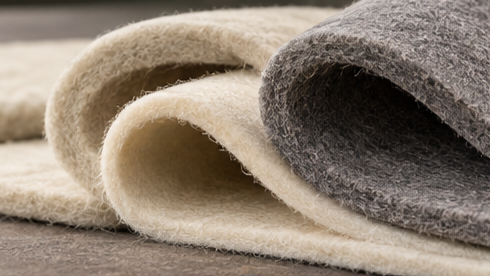
Nonwoven wool felt is a textile manufactured by interlocking natural wool fibers through moisture, heat, pressure, and mechanical agitation rather than traditional weaving or knitting.
The natural scales on wool fibers allow them to interlock, creating a cohesive material with distinctive performance characteristics.
Industrial wool felt is available in various densities, thicknesses, and grades, allowing manufacturers to select materials based on specific requirements.
Unlike woven textiles, felt does not have a conventional warp-and-weft structure. This allows it to be cut into intricate shapes without the same tendency to unravel along its edges.
These characteristics make industrial wool felt particularly suitable for die-cut components, gaskets, seals, wipers, washers, and cushioning materials.
1. Exceptional Durability and Resilience
One of the primary advantages of nonwoven wool felt is its natural resilience.
Wool fibers possess a crimped structure that allows them to compress and recover under moderate mechanical loads. This makes felt useful in applications involving repeated contact, cushioning, and vibration.
Depending on the density and grade selected, industrial wool felt can provide:
Resistance to moderate abrasion and mechanical wear
Compression and cushioning performance
Dimensional stability under appropriate operating conditions
Reduced fraying when cut into custom shapes
Reliable performance in repetitive-contact applications
For example, wool felt is frequently used in industrial machinery as a protective interface between moving components.
Properly specified felt can help minimize surface damage, reduce operational noise, and extend the service life of equipment.
Common applications: Machine pads, protective liners, industrial wipers, and equipment cushioning.
2. Excellent Oil Absorption and Lubrication Retention
Perhaps one of the most valuable properties of wool felt in industrial manufacturing is its ability to absorb and retain lubricating oils.
The interconnected fiber structure creates spaces capable of holding liquids and distributing them through capillary action.
This characteristic makes wool felt particularly useful in machinery requiring controlled lubrication.
Industrial applications include:
Bearing lubrication pads
Oil-retaining washers
Lubrication wicks
Industrial machinery oilers
Felt seals and oil distribution systems
For equipment manufacturers, wool felt can provide a simple and effective method of delivering lubricant to designated contact surfaces.
Its ability to retain and gradually release oil can help maintain lubrication between scheduled maintenance intervals.
However, performance depends on the felt's density, fiber composition, lubricant viscosity, and operating conditions.
For OEMs and maintenance professionals, selecting the correct industrial felt grade is essential to achieving the desired oil absorption and release characteristics.
3. Effective Vibration Dampening and Noise Reduction
Industrial machinery generates vibration, friction, and mechanical noise during operation.
Nonwoven wool felt can help reduce these effects through its compressible, fibrous structure.
When properly specified, felt can absorb some mechanical energy and provide cushioning between contacting surfaces.
This makes it valuable in applications where metal-to-metal contact, rattling, or vibration must be minimized.
Industries benefiting from these properties include:
Automotive manufacturing
Aerospace component manufacturing
Industrial equipment production
Appliance manufacturing
General machinery and equipment maintenance
In automotive applications, felt components may serve as anti-rattle pads, protective liners, and cushioning materials.
In manufacturing equipment, felt can be incorporated into assemblies to reduce incidental contact noise and protect adjacent components.
The effectiveness of wool felt for vibration control depends on material density, thickness, loading, and frequency.
4. Thermal Insulation and Natural Flame Resistance
Wool fibers naturally contain air spaces that contribute to their thermal insulation properties.
When consolidated into felt, these fibers create a material capable of slowing heat transfer under suitable conditions.
This makes wool felt useful in selected thermal insulation and temperature-management applications.
Wool also has inherent flame-resistant characteristics compared with many common textile fibers. It generally requires relatively high temperatures to ignite and tends to char rather than melt.
Potential industrial applications include:
Thermal insulating pads
Equipment insulation
Protective barriers
Temperature-sensitive component separation
Selected transportation and machinery applications
Importantly, natural flame resistance does not automatically qualify wool felt for fire-rated or high-temperature applications.
Material selection must account for operating temperature, exposure duration, and any applicable flammability standards.
For critical applications, manufacturers should verify the performance of the specific felt grade against the required specifications.
5. Versatility in Custom Die-Cut Industrial Components
One of the greatest advantages of nonwoven wool felt is its adaptability to precision converting and fabrication.
Industrial manufacturers rarely require felt exclusively in standard sheets or rolls. More often, the material must be converted into a component designed for a particular piece of equipment.
Wool felt can be fabricated into numerous configurations, including:
Custom die-cut gaskets
Felt washers and spacers
Industrial seals
Felt strips and wipers
Protective pads and liners
Lubrication components
Precision-cut OEM parts
At Southeastern Felt & Supply Corp., we understand that material selection is only part of the manufacturing equation.
Thickness, density, dimensional tolerances, and component geometry must all be considered when developing a reliable industrial felt component.
Working with an experienced industrial felt supplier helps manufacturers identify suitable materials and converting methods for their applications.
6. Renewable Material with Sustainability Advantages
As manufacturers evaluate the environmental impact of their supply chains, natural-fiber materials are receiving increased attention.
Wool is a renewable fiber produced through the regular shearing of sheep.
Unlike petroleum-derived synthetic fibers, wool originates from a biological resource and can biodegrade under suitable conditions.
Potential sustainability advantages include:
Renewable natural-fiber content
Biodegradability under appropriate conditions
Opportunities for long service life
Reduced reliance on petroleum-derived textile fibers
Potential use in applications seeking natural-material alternatives
However, the overall environmental impact of wool felt depends on livestock management, processing methods, transportation, product durability, and disposal conditions.
Manufacturers should evaluate these factors when comparing wool felt with synthetic alternatives.
For businesses seeking durable, naturally derived industrial materials, wool felt can be an attractive option.
7. Wide Range of Industrial Applications
The combination of resilience, absorbency, insulation, and fabricability makes nonwoven wool felt useful across many industries.
Automotive Manufacturing
Wool felt is used in selected sealing, cushioning, lubrication, and protective applications. Custom components can help manage friction, vibration, and contact between adjacent surfaces.
Aerospace and Defense
Industrial felt may be specified for specialized cushioning, wiping, sealing, and protective applications where material properties and documentation must meet defined requirements.
Industrial Machinery
Equipment manufacturers and maintenance teams use felt for lubrication systems, bearing protection, equipment wipers, and mechanical cushioning.
Metalworking and Manufacturing
Felt components can provide surface protection, controlled wiping, and lubrication in manufacturing operations.
Printing and Converting Equipment
Specialized felt products support selected wiping, sealing, and fluid-management functions in printing and converting machinery.
OEM and MRO Applications
Original equipment manufacturers and maintenance, repair, and operations professionals rely on custom felt components to support equipment reliability and replace worn parts.
These diverse applications demonstrate why industrial wool felt continues to serve as an important engineering material.
How to Choose the Right Industrial Wool Felt
Not all wool felt performs the same way.
When specifying a material, engineers and purchasing professionals should evaluate several factors.
Density: Influences firmness, compression, absorbency, and wear characteristics.
Thickness: Determines component fit, cushioning capability, and available material volume.
Wool content: Different fiber compositions can affect resilience, absorbency, and thermal properties.
Operating environment: Temperature, chemicals, moisture, and mechanical loading influence material suitability.
Manufacturing tolerances: Precision components require careful consideration of cutting methods and dimensional requirements.
Applicable specifications: Certain applications require compliance with recognized material standards, including SAE or military specifications.
Choosing the appropriate grade can improve component performance while reducing unnecessary replacement costs and equipment downtime.
Partner with Southeastern Felt & Supply for Industrial Wool Felt Solutions
For manufacturers, selecting the right industrial textile is about more than purchasing raw material.
It requires understanding how a material performs within a specific application and ensuring the finished component meets the intended requirements.
Southeastern Felt & Supply Corp. specializes in industrial felt materials and fabricated textile components for OEM and MRO applications.
Whether your application requires custom die-cut wool felt gaskets, lubrication wicks, protective pads, industrial seals, or precision-cut components, our team can help evaluate your requirements and identify appropriate material options.
With experience serving a wide range of industrial markets, we understand the importance of consistent quality, reliable supply, and application-specific solutions.
Looking for an industrial wool felt supplier?
Contact Southeastern Felt & Supply Corp. to discuss your material specifications, request a quotation, or learn more about custom nonwoven wool felt components.
Frequently Asked Questions About Industrial Wool Felt
What is nonwoven wool felt used for?
Nonwoven wool felt is used in industrial gaskets, seals, lubrication wicks, washers, protective pads, machinery wipers, cushioning components, and vibration-dampening applications.
Is wool felt suitable for industrial machinery?
Yes. Properly specified wool felt is widely used in industrial equipment for lubrication, cushioning, wiping, and protective functions. Suitability depends on the operating environment and material grade.
Can wool felt be custom die-cut?
Yes. Industrial wool felt can be die-cut or otherwise fabricated into custom shapes, including gaskets, washers, strips, pads, and precision components.
What is the difference between wool felt and synthetic felt?
Wool felt is manufactured from natural wool fibers, while synthetic felt typically uses fibers such as polyester or other engineered polymers. Differences include absorbency, thermal behavior, resilience, chemical resistance, and cost.
Is industrial wool felt available in different densities and thicknesses?
Yes. Industrial wool felt is manufactured in numerous grades, thicknesses, and densities to accommodate different mechanical and functional requirements.