
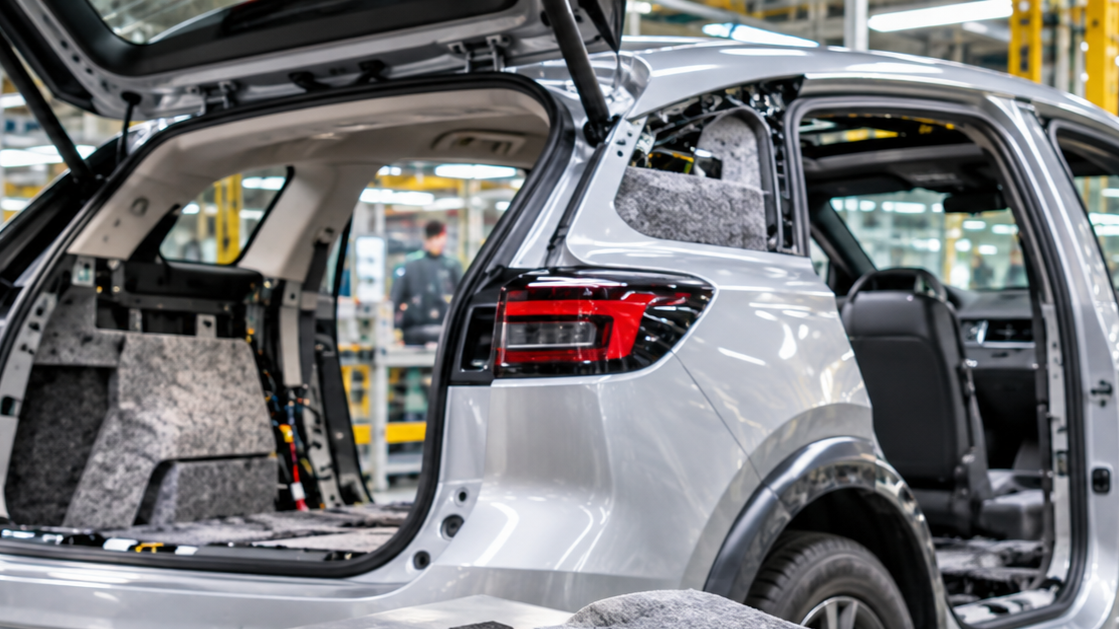
The Quiet Revolution: How Nonwoven Felt Supports Electric Vehicle Manufacturing
From Tesla and Rivian to Scout Motors, discover why engineered nonwoven felt is an increasingly important material in electric vehicle design, manufacturing, and performance.
Electric vehicles are changing the automotive industry in ways that extend far beyond batteries and electric motors.
As manufacturers eliminate traditional internal combustion engines, they are rethinking how vehicles manage noise, vibration, temperature, component protection, and passenger comfort.
One material playing an important role in this evolution is nonwoven industrial felt.
Although often overlooked, engineered felt components help manufacturers address many of the challenges associated with modern vehicle design. From reducing unwanted interior noise to protecting sensitive components and cushioning contact surfaces, technical felts provide solutions that are lightweight, adaptable, and cost-effective.
At Southeastern Felt & Supply Corp. (SEFCO), we are proud to support the automotive industry, including electric vehicle manufacturers Tesla, Rivian, and Scout Motors, alongside established automotive manufacturers including Hyundai, BMW, Nissan, and General Motors.
Our experience supplying custom-fabricated felt components gives us a firsthand understanding of how these materials contribute to modern automotive manufacturing.
Here are eight important applications for nonwoven felt in electric vehicles—and why demand for engineered textile components continues to evolve.
1. Noise, Vibration, and Harshness (NVH): Making Quiet Vehicles Even Quieter
One of the most noticeable differences between electric vehicles and traditional gasoline-powered vehicles is the absence of conventional engine noise.
While this makes EVs quieter overall, it also exposes sounds that might otherwise be masked by an internal combustion engine.
Road noise, electric drivetrain whine, interior rattles, and vibrations from auxiliary systems can become more noticeable.
Automotive engineers address these challenges through noise, vibration, and harshness (NVH) management.
How Nonwoven Felt Helps Control NVH
Engineered felt materials can serve several functions:
Absorbing certain airborne sound frequencies
Cushioning contact between adjacent components
Reducing incidental vibration and impact noise
Preventing hard surfaces from contacting one another
Providing acoustic treatment within selected interior assemblies
The fibrous structure of nonwoven felt can help dissipate sound energy, while its compressibility makes it useful as a cushioning interface.
Material thickness, density, fiber composition, and installation method influence acoustic performance.
Why This Matters for EV Manufacturers
Passenger expectations for quietness and refinement are particularly high in electric vehicles.
An unwanted rattle that might be difficult to hear in a conventional vehicle can become much more apparent in an EV cabin.
For manufacturers, small felt components can contribute to the overall perception of vehicle quality.
2. Buzz, Squeak, and Rattle (BSR): Eliminating Unwanted Interior Noise
Closely related to NVH is the challenge of buzz, squeak, and rattle, commonly referred to as BSR.
BSR occurs when vehicle components vibrate, rub, or make intermittent contact during operation.
Potential sources include:
Dashboard assemblies
Interior trim panels
Center consoles
Door panels
Wiring harness contact points
Plastic-to-metal interfaces
Adjacent interior components
Nonwoven felt can be used to create a soft interface between contacting surfaces.
Felt as an Anti-Squeak Material
When properly selected, felt pads and strips can reduce direct contact between surfaces that might otherwise produce noise.
For example, a precisely cut felt component positioned between two interior trim pieces may help prevent squeaking caused by relative movement.
Synthetic needle-punched polyester felt is particularly relevant to certain automotive BSR applications because it can be manufactured in consistent thicknesses and combined with adhesive backing.
Precision Converting for Automotive Assemblies
BSR components are frequently small, highly customized parts.
They may require:
Precision die cutting
Adhesive lamination
Kiss cutting
Consistent material thickness
Complex component geometry
Southeastern Felt supports automotive converting requirements, including die-cut components and specialized processing solutions through qualified partners where appropriate.
For EV manufacturers, these components can provide a practical way to address unwanted noise without substantial increases in vehicle weight or assembly complexity.
3. Battery Pack Protection and Thermal Management
The battery pack is one of the most critical and expensive systems in an electric vehicle.
Battery assemblies require careful management of mechanical loading, vibration, electrical isolation, and temperature.
Engineered nonwoven materials can support selected protective and insulation functions within these systems.
Potential Applications for Technical Felts
Depending on the material and design requirements, specialized nonwovens may be considered for:
Protective cushioning
Vibration isolation
Component separation
Thermal insulation
Abrasion protection
Cable and harness protection
Not All Felt Is Suitable for Battery Applications
This distinction is essential.
Traditional wool felt should not automatically be specified for battery thermal barriers or high-voltage insulation.
Battery-related applications may require specialized materials with validated electrical, thermal, flame, and mechanical properties.
Aramid-based felts and other engineered high-temperature nonwovens can be candidates for certain applications, subject to testing and qualification.
Material selection must be based on the actual operating environment and applicable automotive safety requirements.
For component manufacturers, an experienced textile converter can help transform approved materials into the required shapes and dimensions.
4. Protective Liners and Surface Isolation
Electric vehicles contain numerous assemblies where adjacent components must be protected from abrasion, vibration, or incidental contact.
These interfaces may involve plastic, metal, painted surfaces, or other engineered materials.
Nonwoven felt provides a flexible option for selected protective applications.
Common Protective Felt Components
Examples include:
Protective liners
Contact pads
Anti-abrasion strips
Surface-isolation components
Cushioning washers
Die-cut protective inserts
Felt can provide a softer contact surface between components, helping reduce unwanted rubbing and surface damage.
Lightweight Component Protection
Weight remains an important consideration in electric vehicle design.
Reducing unnecessary vehicle mass can contribute to improved energy efficiency and driving range.
Small, lightweight felt components can offer localized cushioning and surface protection without requiring substantial structural changes.
The appropriate felt must still be selected for abrasion resistance, temperature exposure, moisture, and expected service life.
5. Sealing and Dust Protection
Industrial felt has a long history in machinery sealing and wiping applications.
In electric vehicles, selected felt components may also be used for dust management, cushioning, and protective interfaces.
Where Felt Seals May Be Used
Potential applications include:
Interior equipment housings
Mechanical assemblies
Protective dust barriers
Selected moving components
Wiping interfaces
Auxiliary equipment
Wool felt and synthetic nonwovens can provide conformable contact surfaces in appropriate designs.
However, felt is not inherently a substitute for an engineered watertight or airtight seal.
Applications requiring defined ingress-protection ratings, high-pressure sealing, or critical environmental isolation may require elastomers or other specialized materials.
Custom Die-Cut Seals and Gaskets
Southeastern Felt supplies custom-fabricated felt components, including washers, gaskets, seals, and protective pads.
Our converting capabilities allow components to be manufactured to customer-specified dimensions and material requirements.
6. Wiring Harnesses and Electrical Component Protection
Electric vehicles contain extensive electrical systems, including high-voltage power distribution, low-voltage wiring, sensors, controllers, and communication networks.
These systems require careful routing and protection against vibration, abrasion, and contact with surrounding structures.
Nonwoven materials can be used in selected harness-protection applications.
Automotive Felt for Wiring Protection
Applications may include:
Anti-rattle harness pads
Protective wrapping
Contact-isolation strips
Abrasion-resistant liners
Adhesive-backed cushioning components
Felt can help prevent a wiring harness from rubbing directly against adjacent interior components.
Material Requirements
For automotive electrical applications, engineers must evaluate:
Temperature exposure
Abrasion resistance
Flammability requirements
Adhesive performance
Moisture and chemical exposure
Electrical properties where relevant
Materials used near high-voltage systems require appropriate qualification.
The role of a textile converter is to manufacture components from materials that satisfy the applicable engineering specifications.
7. Interior Comfort, Trim, and Acoustic Insulation
The modern EV interior is designed around passenger comfort, quietness, and perceived quality.
As vehicle manufacturers introduce new cabin layouts, larger displays, and different interior structures, the need for lightweight cushioning and acoustic materials continues.
Nonwoven felt can be incorporated into selected interior assemblies for:
Acoustic absorption
Trim cushioning
Anti-squeak interfaces
Protective backing
Component separation
Vibration management
Wool Felt vs. Polyester Felt in Automotive Interiors
Different nonwoven materials offer different advantages.
Natural wool felt provides resilience, compressibility, and useful acoustic properties.
Polyester nonwoven felt can offer consistent fiber composition, controlled thickness, and characteristics suited to certain automotive interior applications.
The correct choice depends on temperature requirements, dimensional stability, flammability, cost, durability, and customer specifications.
For OEM and Tier 1 manufacturers, the material must meet the performance requirements of the complete assembly.
8. Manufacturing Equipment and Production-Line Applications
Not every felt component associated with electric vehicle manufacturing becomes part of the finished vehicle.
Industrial felt also supports the equipment and production processes used to manufacture automotive components.
This is an important distinction because automotive suppliers require reliable consumables and maintenance components throughout their operations.
Industrial Felt in Manufacturing Equipment
Applications can include:
Machinery wipers
Lubrication pads and wicks
Protective conveyor contact surfaces
Equipment cushioning
Sealing components
Production tooling protection
Custom maintenance replacement parts
In these applications, felt may help manage friction, distribute lubricants, protect surfaces, or support equipment reliability.
For automotive production facilities, minimizing downtime and maintaining consistent equipment performance are critical operational priorities.
Southeastern Felt's experience in industrial converting extends to both finished OEM components and maintenance-related applications.
Where Southeastern Felt Supports the Electric Vehicle Industry Today
Southeastern Felt & Supply Corp. has established relationships within the automotive industry, including electric vehicle manufacturers Tesla, Rivian, and Scout Motors.
Our automotive work encompasses several important categories of technical felt components.
Component categoryFunctionFelt applicatorsControlled material or fluid application in appropriate processesProtective linersCushioning and surface protectionVibration dampenersReducing unwanted mechanical contact and vibrationIndustrial wipersWiping and fluid-management functionsFelt sealsProtective and conformable sealing interfacesCustom die-cut componentsApplication-specific parts manufactured to customer drawings
These categories reflect our broader automotive supply experience. Individual component designs, installation locations, and customer-specific programs may be proprietary.
Our automotive experience also extends to established manufacturers including Hyundai, BMW, Nissan, and General Motors.
This combination of legacy automotive and electric vehicle relationships gives Southeastern Felt a useful perspective on how material requirements are evolving across the industry.
Why EV Manufacturers Need Experienced Felt Converters
Automotive engineers rarely need felt simply as a roll of material.
They need components manufactured to specific dimensions, performance requirements, and production schedules.
A material that performs well in sheet form must also be converted consistently into the required finished geometry.
Important Converting Capabilities
For automotive applications, these may include:
Precision die cutting: Manufacturing repeatable custom shapes for production assemblies.
Slitting and rewinding: Preparing felt strips and rolls for downstream manufacturing.
Adhesive lamination: Adding application-specific adhesive backing through suitable processing methods.
Kiss cutting: Producing adhesive-backed components on release liners for efficient installation.
Material selection: Identifying appropriate wool, polyester, aramid, or other technical nonwovens based on engineering requirements.
Quality control: Establishing dimensional and material checks to support production consistency.
Southeastern Felt works with industrial customers to develop custom components that meet their specified material and fabrication requirements.
The Future of Nonwoven Felt in Electric Vehicles
As electric vehicle designs continue to evolve, technical textiles will remain important in addressing noise, vibration, protection, and manufacturing challenges.
Several developments are particularly relevant.
Increasing Attention to Interior Noise
Quiet electric drivetrains make incidental cabin sounds more noticeable, supporting continued interest in anti-squeak and vibration-control materials.
Lightweight Material Design
Automotive engineers continue to evaluate materials that provide functional performance without unnecessary mass.
Greater Use of Custom Components
Complex vehicle assemblies create opportunities for precisely fabricated pads, liners, seals, and protective interfaces.
Advanced Technical Nonwovens
Specialized polyester, aramid, and other engineered materials can address applications where traditional wool felt may not meet the required performance criteria.
Supply Chain Reliability
Automotive manufacturers and Tier 1 suppliers require dependable sources for qualified materials and repeatable components.
Experienced domestic converters can provide valuable support through material sourcing, fabrication, and responsive customer service.
Partner With Southeastern Felt & Supply Corp. for EV Felt Components
Electric vehicles may represent a technological shift in transportation, but many of the underlying engineering challenges remain familiar: vibration, friction, unwanted noise, component protection, and manufacturing efficiency.
Nonwoven felt provides a versatile material platform for addressing these challenges.
At Southeastern Felt & Supply Corp., we combine decades of industrial textile experience with custom converting capabilities to support automotive manufacturers and their supply chains.
From natural wool felt to engineered synthetic nonwovens, our product range supports applications requiring cushioning, sealing, wiping, vibration management, and precision fabrication.
Our experience serving Tesla, Rivian, Scout Motors, and established automotive manufacturers reflects our commitment to supporting the industry's evolving material requirements.
Looking for a Custom Automotive or EV Felt Supplier?
Whether you need a custom die-cut felt component, an automotive anti-rattle material, a protective liner, or a specialized nonwoven part, Southeastern Felt can help evaluate your application.
Request a Quote from Southeastern Felt & Supply Corp.
Share your engineering drawings, material specifications, annual quantities, and performance requirements with our team.
Frequently Asked Questions About Felt in Electric Vehicles
What is nonwoven felt used for in electric vehicles?
Nonwoven felt can be used for noise reduction, anti-squeak cushioning, vibration management, protective liners, selected sealing applications, and wiring harness protection. Specialized nonwovens may also serve certain thermal-management applications.
Why is felt important in electric vehicles?
Electric vehicles have quieter drivetrains than traditional combustion-engine vehicles, making rattles, squeaks, and other incidental noises more noticeable. Felt can help cushion contacting surfaces and manage certain acoustic and vibration issues.
What is BSR in automotive manufacturing?
BSR stands for buzz, squeak, and rattle. These noises can occur when components vibrate or contact one another. Engineered nonwoven felt pads and strips can help reduce unwanted contact noise.
Is wool felt used in EV battery packs?
Specialized nonwoven materials may be used for selected battery-related protection and insulation applications. However, traditional wool felt is not automatically suitable for battery thermal barriers or electrical insulation. Materials must be qualified for their intended function.
What is the difference between wool felt and polyester automotive felt?
Wool felt is manufactured from natural fibers and offers useful resilience and compressibility. Polyester felt is synthetic and can provide consistent material characteristics for selected automotive applications. Performance depends on the specific grade and operating requirements.
Can automotive felt components be custom die-cut?
Yes. Industrial felt can be fabricated into custom pads, liners, gaskets, washers, and other components using die cutting and related converting methods.
Does Southeastern Felt supply electric vehicle manufacturers?
Yes. Southeastern Felt & Supply Corp. has automotive customer relationships that include Tesla, Rivian, and Scout Motors, along with established manufacturers such as Hyundai, BMW, Nissan, and General Motors.